Attic floors
Open, accessible attics where the ceiling plane is sealed and insulation laid over the joists.
Spray Foam Masters removes, air-seals and re-insulates attics for residential and commercial buildings across Simcoe County. We inspect the attic before quoting, because what the space actually needs is rarely obvious from below.
On most houses in this part of Ontario the attic is where the largest share of heat is lost, and it is usually the cheapest place to fix it. Warm air rises, finds every unsealed gap in the ceiling, and carries heat straight into a vented attic. On a cold morning you can often read the result in the snow melt pattern on the roof.
It is also the most commonly under-insulated part of an older home. Insulation settles and compresses over decades, and standards have moved considerably since much of the local housing stock was built. An attic that was adequate in 1975 is rarely adequate now, and in many houses it has been topped up once or twice without anyone addressing what was underneath.
This is the part most often skipped, and it changes the outcome more than the choice of material does.
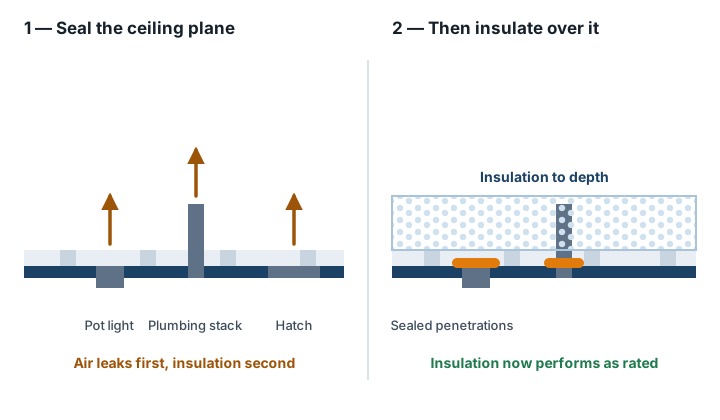
Insulation slows heat conducting through it. It does very little about air moving through it. If warm, moist household air is still leaking into the attic, it carries heat and moisture up with it no matter how deep the material on top is. In winter that moisture reaches cold roof sheathing and condenses.
So the sequence matters. Seal the leaks first — around light fixtures, bathroom fans, plumbing stacks, wiring penetrations, the attic hatch and the top plates. Then insulate. Done in that order the insulation performs as intended. Done in the wrong order, the attic can end up damper than before, and the homeowner has paid for material that is not doing its job.
None of these is proof on its own, but any of them is a reason to have someone look.
Ice dams are common enough around Georgian Bay and the snow belt that they deserve explaining properly, because they are widely misdiagnosed as a roofing fault.
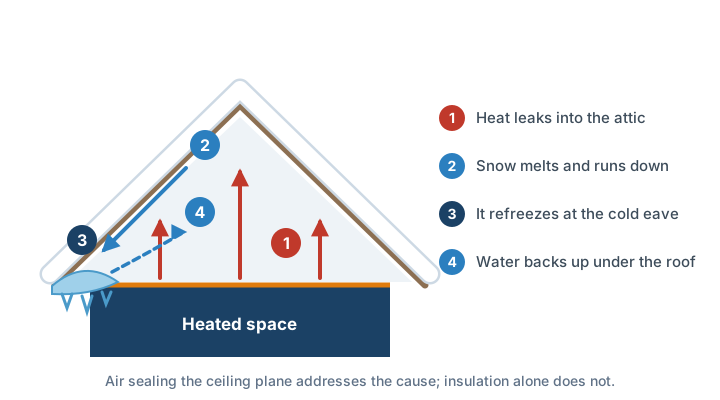
What actually happens is a heat problem. Warm air leaking into the attic warms the roof deck and melts the snow sitting on it. The meltwater runs down the slope until it reaches the eave, which overhangs unheated space and stays cold, and there it refreezes. Over repeated cycles that builds a ridge of ice, and water pooling behind the ridge can back up under the roofing and into the building.
The fix is to keep the attic cold, which means sealing the ceiling plane and insulating it properly. Roofing measures manage the symptom; they do not remove the cause.
Seeing ice at the eaves this winter? An attic inspection costs nothing and will tell you whether it is a heat problem, a ventilation problem, or both.
Not every attic needs stripping, and we will tell you when it does not. Some do. Insulation that is water-damaged from a roof leak, contaminated by rodents, heavily compacted, or that contains vermiculite should come out rather than be buried under something new.
Removal is done with a vacuum system and containment, so material comes out of the attic rather than through the house. Once the attic is clear, the ceiling plane is properly accessible for air sealing, which is usually the real reason removal was worth doing in the first place.
Vermiculite is a special case. Some vermiculite contains asbestos, and it must be tested before anyone disturbs it. We do not remove vermiculite. If we find it or suspect it, we will stop and tell you, and recommend a licensed asbestos abatement contractor. That work belongs with them, not with us.
Where the existing insulation is dry, clean and uncontaminated, topping up is often the sensible option — after the air sealing is done. There is no merit in removing sound material for its own sake, and we would rather quote you the smaller job when the smaller job is right.
Full replacement makes sense when the existing material is compromised, when it is so compacted that it is no longer performing, or when access to the ceiling plane matters more than the material already up there. The assessment is what separates the two, and it is not a judgement anyone can make from the hatch.
Three materials cover almost all attic work, and the attic itself usually decides which is appropriate.
Blown-in loose fill is installed with a hose and settles into a continuous layer, so it covers around obstructions and irregular joist spacing well. It is the common choice for an open, accessible attic floor. Spray foam seals and insulates in one step, which makes it the practical answer for knee walls, cathedral ceilings and attics with awkward geometry or many penetrations. Fibreglass batts suit accessible attics with regular joist spacing, where they can be fitted without gaps or compression.
Depth is what determines performance, whichever material is used, so it is measured rather than estimated and stated in the quote.
A vented attic is designed to have outside air moving through it, and that has to keep working after the insulation goes in. The usual failure is simple: loose fill or batts pushed into the eaves, blocking the soffit vents that feed the whole system.
Baffles at the eaves keep that path clear, and they are part of the job rather than an extra. We check the existing ventilation as part of the assessment, because insulating a poorly ventilated attic without addressing it can move a heat problem into a moisture problem.
Attic work covers more than the open floor. These are the areas that come up most often.
Open, accessible attics where the ceiling plane is sealed and insulation laid over the joists.
Where the insulation line moves to the underside of the roof rather than the ceiling.
One of the largest single leaks in most houses, and among the cheapest to fix properly.
Storey-and-a-half houses, where the short vertical walls behind upstairs rooms are often bare.
The bonus room that never holds heat. Usually a floor and rim problem more than a ceiling one.
Tight assemblies where batts rarely sit properly and ventilation space has to be preserved.
Water-damaged, rodent-contaminated or heavily compacted material vacuumed out under containment.
Flat and low-slope assemblies in commercial buildings, where access drives most of the work.
Sound existing insulation brought up to depth, after the air sealing has been addressed.
| Approach | How it works | Suits | Considerations |
|---|---|---|---|
| Blown-in loose fill | Cellulose or fibreglass blown to a measured depth across the attic floor. | Open, accessible attics with a level joist layout. | Good coverage around obstructions. Depth must be maintained and baffles kept clear at the eaves. |
| Spray foam | Applied at the ceiling plane or the roof deck; insulates and air-seals in one step. | Difficult geometry, knee walls, cathedral ceilings, attics with many penetrations. | Handles sealing and insulating together. Where it is left exposed, a covering may be required. |
| Fibreglass batts | Pre-cut lengths laid between joists at a consistent depth. | Accessible attics with regular joist spacing and few obstructions. | Cost-effective when the layout suits them. Performance depends entirely on fit — no gaps, no compression. |
| Air sealing alone | Sealing the leakage points in the ceiling plane without adding material. | Attics that already have adequate depth but were never sealed. | Sometimes the whole answer, and usually the cheapest. We will say so when that is the case. |
Not sure which your attic needs? That is what the inspection is for. We will tell you which of these suits the space and why.
Six steps, and the second one is someone actually getting into the attic.
What the house is doing — cold rooms, ice at the eaves, a heating bill that will not come down — and what you already know about the attic.
We get into the attic and look: depth and condition of the existing material, evidence of moisture or rodents, ventilation, and what the ceiling plane looks like.
We identify the leakage points that matter — hatch, fixtures, stacks, top plates — because these determine whether insulation will perform once installed.
Whether to remove or top up, which material suits the attic, and what depth we are aiming for, with a written quote.
Old material vacuumed out under containment where needed, leaks sealed, baffles set at the eaves, then insulation installed to depth.
We show you what was done, confirm the depth achieved, and leave the attic tidy with the access sealed properly.
The inspection is free. It is also the only way anyone can tell you honestly what your attic needs.
We do not publish prices. A figure quoted without seeing the attic would be misleading, because two attics of the same area can differ substantially on the factors below.
Removal is the single largest swing. Stripping a contaminated attic under containment, disposing of the material and then starting the actual insulation work is a substantially bigger job than topping up sound material. Access is the other one: a low attic with a small hatch takes longer than a tall one you can stand up in, for the same floor area.
Get a figure based on your actual attic. We inspect, then put the scope, material and target depth in writing at no charge.
We work right across the Simcoe County area, close enough to come back if something needs a second look.
Residential and commercial, new builds and retrofits alike.
Every quote follows an actual inspection. Nothing is priced from a floor plan or a phone call.
If air sealing alone would fix your problem, that is what we will quote, even though it is the smaller job.
The quote states depth, material and what is included, so you can compare it properly.
Insulation, air sealing and ventilation are one system. We look at all three.
We work throughout Simcoe County from our base in Barrie: Innisfil and Bradford in the south, Orillia and Midland to the north, Alliston to the southwest, and Collingwood and Wasaga Beach toward Georgian Bay, plus surrounding townships. Ice damming is noticeably more common in the snow-belt communities, and older housing in Orillia and Midland tends to need the ceiling plane addressed rather than simply topped up — see Orillia and Midland for what that looks like in practice.
Attic work often sits alongside other insulation. Spray foam insulation is frequently the right material for knee walls and cathedral ceilings, fibreglass batts suit regular accessible attics, and where foam is left exposed our fireproofing and thermal barrier work covers the protective covering. See all services.
Two of our articles go deeper than this page does. Sealing an attic before you insulate it sets out the order the work happens in and why depth comes last, and ice dams are a heat problem explains why a roof making ice in February is usually telling you about the ceiling below it rather than the shingles.
We carry out attic work throughout Simcoe County, from our base in Barrie, and the snow belt towns see the sharpest version of it — Midland and the Georgian Bay shoreline in particular.
The usual signs are ice building up at the eaves, uneven snow melt on the roof, upstairs rooms that never hold temperature, and a heating bill that stays high in a house that otherwise seems sound. If you can see the tops of the ceiling joists when you look into the attic, there is almost certainly room to improve it. Visibly compressed, discoloured or damp material, or any evidence of rodents, is a stronger signal. The only reliable way to know is for someone to get into the attic and look.
Insulation slows heat conducting through it. It does very little about air moving through it. If warm, moist household air is still leaking into the attic through light fixtures, plumbing stacks, the hatch and the top plates, it carries heat and moisture up with it regardless of how much material is lying on top. In winter that moisture condenses on cold roof sheathing. Adding insulation over an unsealed ceiling is the most common attic mistake we see, and it can leave the attic damper than it was before.
Both, depending on what is up there. Material that is dry, clean and uncontaminated can often be topped up once the air sealing is done. Material that is water-damaged from a roof leak, contaminated by rodents, heavily compacted, or that contains vermiculite should come out rather than be buried. Removal also gives clear access to the ceiling plane, which is usually the real reason it is worth doing. We assess it before recommending either, and we will tell you when topping up is genuinely the better value.
Vermiculite needs to be tested before anyone disturbs it, because some of it contains asbestos. We do not remove vermiculite. If we find it or suspect it in your attic, we will stop, tell you, and recommend that you engage a licensed asbestos abatement contractor. That is not us being cautious for the sake of it — disturbing it is exactly the wrong thing to do, and the testing has to come first. Once it has been dealt with properly, we can carry out the insulation work.
It addresses the usual cause. Ice dams form when heat escaping into the attic melts snow on the roof, the meltwater runs down to the cold eave and refreezes there, and the resulting ridge of ice backs water up under the roofing. Air sealing and insulating the ceiling plane keeps the attic cold, which is what stops the melting. Roof ventilation and the roof assembly itself also matter, so a badly ventilated roof may still need separate attention. Anyone promising you a guaranteed result without seeing the roof is guessing.
More than most older houses in this area currently have. Rather than quote a number that may not apply to your assembly, the honest answer is that the target depends on the material, the construction of the attic and the requirements applicable to the building. What matters as much as the figure is that the depth is actually achieved and maintained across the whole attic, including the awkward edges, and that it is not compressed or interrupted. We set a target depth in the written quote so you know what you are buying.
Blown-in loose fill is installed with a hose and settles into a continuous layer, so it covers around obstructions and irregular joist spacing well. Batts are pre-cut lengths laid between joists, which works when the layout is regular and access is good, and tends to leave gaps when it is not. Blown-in is usually the better choice in a typical retrofit attic. Batts can suit a clean, regular attic and a defined budget. The attic itself decides which is appropriate more than any general preference does.
Yes, and it suits some attics considerably better than loose fill. Because it seals and insulates in one step, it is often the practical answer for knee walls, cathedral ceilings, attics with many penetrations, and assemblies where getting any other material to sit properly is difficult. It can be applied at the ceiling plane or at the roof deck depending on the design intent. Where foam is left exposed, a protective covering may be required — that is covered on our fireproofing page.
It depends on the attic, and we would rather give you a realistic figure after seeing it than a general one now. A straightforward top-up on an accessible attic is a much shorter job than a full removal, air seal and re-insulation of a contaminated space with poor access. Removal roughly doubles the work because the material has to come out under containment before anything else can start. We put a realistic schedule in the written quote once we have been up there.
We do not publish prices, because a figure quoted without seeing the attic would be misleading. Cost is driven by the area, whether removal is needed, the condition of the existing material, how much air sealing is required, the material and target depth, access, ventilation work and disposal. Two attics of the same square footage can differ substantially on those factors. Assessments and written quotes are free, and the quote sets out the scope so you can compare it properly against anyone else you ask.
It is usually the highest-return insulation work available on an older house, which is why we recommend starting there. Warm air rises and finds every unsealed gap in the ceiling, so the attic is where most heat is lost and where a fix reaches the largest area for the least disruption. Older houses in Orillia, Midland and the established parts of Barrie often have insulation added in layers across decades with the air barrier never addressed. That is the situation where sealing and re-insulating makes the most difference.
Attic work does not seal a whole house, so this is rarely the concern people expect it to be. What it does is stop uncontrolled leakage through the ceiling, which is the leakage doing the damage. That said, a genuinely tight house does need adequate ventilation, and if we think a building is heading that way we will say so. Attic ventilation itself is a separate matter and one we look at as part of the assessment, because baffles must stay clear for the roof assembly to work as designed.
Yes, and they are among the assemblies where the choice of material matters most. Cathedral ceilings have limited depth and generally need a ventilation space preserved above the insulation, so getting a batt to perform there is difficult. Knee walls in storey-and-a-half houses are frequently left bare or lightly insulated on the attic side, which is why the rooms behind them are cold. Both are common in older Simcoe County housing, and both usually call for foam rather than loose fill.
Both. Residential work is the majority — houses, storey-and-a-half conversions, rooms over garages and cottages brought up to year-round use. Commercial work tends to involve flat or low-slope ceiling assemblies where access drives most of the scheduling, and it is usually coordinated with other trades. Agricultural buildings are a third category with their own requirements. In every case the process starts the same way, with someone getting into the space and looking before anything is quoted.
We work across the Simcoe County area from our base in Barrie, covering Innisfil, Orillia, Midland, Alliston, Bradford, Collingwood and Wasaga Beach along with the surrounding townships, and the lakes immediately north of the county for cottage and waterfront work. Staying close enough to attend quickly, and to come back if something needs a second look, is part of doing the work properly. If you are unsure whether your address is covered, call and ask.
Tell us what the house is doing and we will get into the attic and find out why. The inspection and the written quote are both free, including when the answer is a smaller job than you expected.
The more you tell us, the more useful the inspection will be. If you would rather talk it through, call 705-571-3008 .
It has reached our inbox and we will get back to you shortly, usually the same working day. If it is urgent, call 705-571-3008.