Balloon-framed air paths
Older framing can leave a continuous air path from the basement right through to the attic, bypassing everything in between.
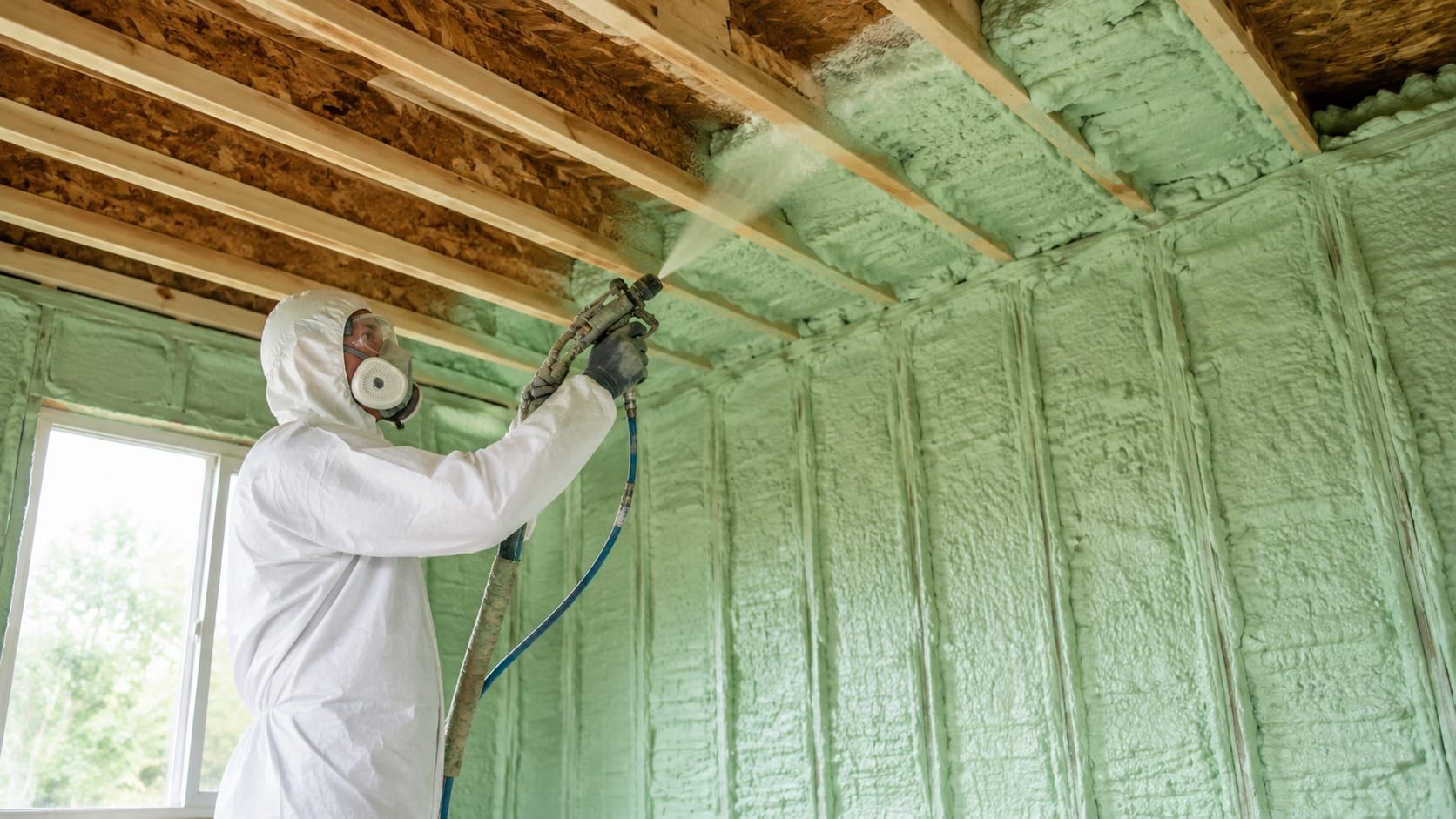
Older housing stock between two lakes, where retrofit insulation needs a careful hand.
Spray Foam Masters works throughout Orillia and the surrounding townships, where the housing stock is considerably older than the growth towns further south. Older assemblies need assessment rather than a standard package, so we look at the building before recommending anything.
What we actually find on buildings here. Whether any of them applies to yours is a question for an assessment.
Older framing can leave a continuous air path from the basement right through to the attic, bypassing everything in between.
Century-era walls were not built as engineered assemblies. Cavity depth and spacing vary, sometimes within one wall.
Attics topped up more than once, in more than one material, with the air barrier never addressed underneath.
Making a leaky old wall airtight without considering which way it dries can create a problem the house did not have.
Decades of service runs through the ceiling plane, each one a leak that insulation alone will not close.
Common in Orillia, frequently bare on the attic side, and usually why the upstairs rooms are cold.
Orillia sits on the narrows between Lake Simcoe and Lake Couchiching, about half an hour north of Barrie. We serve the city and the surrounding townships, including Severn, Ramara and the Atherley and Rama areas.
Orillia has a considerably older building stock than the newer growth towns further south, particularly in the established neighbourhoods around the downtown and toward the waterfront. A good proportion of it predates any meaningful insulation requirement, and that changes how a retrofit has to be approached.
Older walls were not built as the sealed, engineered assemblies modern construction assumes. Balloon framing can leave a continuous air path from the basement to the attic. Wall cavities are often irregular, sometimes partially filled with material added decades ago. Attics have usually been topped up more than once, in more than one material.
The practical consequence is that these houses need assessment rather than a standard package. The attic is almost always where the return is largest, and air sealing the ceiling plane matters more than the final R-value number. We also look carefully at how an older assembly manages moisture before changing it — making a leaky old wall airtight without thinking about where the moisture goes can create a problem the house did not have before. That is a judgement call, and it is worth taking seriously.
Neighbourhoods around the downtown and toward the waterfront, much of it predating any meaningful insulation requirement.
Around Atherley, Rama and the Couchiching shoreline, often with additions from several eras on one building.
Modern builds on the edges of the city, where targeted work usually beats whole-envelope measures.
Orillia is small enough to walk across and old enough that the housing changes character every few streets. Age is the variable that matters most here, and it moves quickly as you go out from the water.
Brick, plaster, board sheathing and stone foundations. Assemblies built before insulation was a requirement, never mind a standard. These are jobs that need looking at rather than pricing over the phone.
Large older houses with later infill on the same street. Attics here have usually been topped up two or three times, in two or three different materials, by two or three different people.
Code-built and generally performing as expected, so the work is targeted rather than wholesale — rim joists, garage ceilings and the occasional cathedral ceiling that batts were never going to suit.
Water on both sides and a lot of buildings that began life as seasonal. Crawl spaces first, additions second, and the walls usually a long way down the list.
Rural properties, workshops and outbuildings mixed in with year-round homes. Post-frame and steel buildings come up regularly, and they are a different job from a house.
Further north again, more exposed, and cold for longer. Attic work carries more weight here than anywhere else we go in this part of the county.
Older houses fail in older ways. If you recognise one of these, it is worth knowing what normally sits behind it before anybody quotes you a number.
Solid masonry and early frame walls were built to dry. Water gets in — driven rain, condensation, a poor sill detail — and it leaves again because air moves through the assembly. Fill that assembly with something that stops air and vapour and the drying stops with it.
The wall does not tell you straight away. It tells you in five or ten years, at the sill plate or the bottom of a stud, and by then the work has been paid for and forgotten about. So on a house of that era we will frequently recommend doing nothing to the walls and putting the money into the attic and the basement instead, where the return is larger and the risk is smaller.
Where a wall genuinely has to be done — usually because it is open for other reasons — the questions are which side it dries to, what the sheathing is, and whether there is anything behind the cladding letting it drain. That is not caution for its own sake. It is the difference between a house that is warmer and a house that is warmer for a while.
The full range, chosen to suit the building rather than the other way round.
An expanding foam that air-seals and insulates in a single application, reaching the gaps batts cannot.
Learn more →Removal, air sealing and re-insulation of attics — usually the highest-return insulation work on an older house.
Learn more →Envelope insulation specified and installed on new custom builds, working to the drawings and around the trade schedule.
Learn more →Three-season cottages and older lake properties, including the crawl spaces and roof assemblies that make winter use difficult.
Learn more →Thermal barrier and fire-resistive coatings applied over foam insulation to meet code separation requirements.
Learn more →Traditional batt insulation, installed properly — which is what actually determines whether it performs.
Learn more →Working on a building in Orillia? The assessment and the written quote are both free, including when the answer is a smaller job than you expected.
Four steps, the same on a crawl space as on a whole building envelope.
Tell us what the building is doing and where in Orillia it is. A short conversation narrows it to a few likely causes.
We attend and look at the assembly: cavity depth, substrate, moisture exposure, access and how the space is used.
Material, target thickness and scope in writing, so you can compare it properly against anyone else you ask.
Surfaces prepared and protected, material applied to the specified depth, then we walk the completed work with you.
If we could only do one thing to a typical older Orillia house it would be the ceiling plane, and it would not be a close call.
The work is less glamorous than it sounds. Sealing the top plates where the walls meet the attic. Building a proper insulated box over the hatch instead of laying a batt on top of it. Getting the bath fan and the range hood ducted outside rather than into the space. Keeping the eaves open so the roof can still breathe, and making sure whatever goes in does not slump into them. Only after all that does depth start to matter.
Old attics come with history, too. Batts over blown material over the original shavings. A knee wall nobody could reach, so nobody insulated it. A chimney chase open all the way down to the basement. Any one of those is worth more than another inch on top.
R-value is the number people ask about and the one that matters least until the air is under control. A house that leaks at R-60 loses to a sealed house at R-40 in any winter this city is likely to have.
We work right across the Simcoe County area from Barrie, so we can attend Orillia quickly and come back if something needs a second look.
Residential and commercial, new builds and retrofits alike.
Older housing stock between two lakes, where retrofit insulation needs a careful hand.
We look at the assembly before recommending anything, rather than pricing from a square-footage figure.
If batts will serve you better than foam, that is what we will quote.
The quote states what is included, so you can compare it properly.
We cover Orillia and the surrounding townships:
Most enquiries here begin with spray foam insulation, though attic insulation is usually the higher-return work on an older building. Fibreglass batts suit regular framed cavities, and where foam is left exposed our fireproofing service covers the protective covering. On a new build we work from the drawings — see custom home insulation — and on a lake property, cottage insulation covers the crawl space and roof assemblies those buildings need. All six are listed on the services page.
If your house is one of the older ones, two articles are worth the time before you commit to anything: how I choose between closed cell and open cell, and what I check before anything gets sprayed — which explains why we often recommend leaving an older wall alone entirely.
If you are still weighing materials, closed cell against open cell sets out where each one earns its keep, and what actually drives the price explains why two quotes on the same building can differ. All eight articles are on the insights page.
Often, but it is a judgement rather than a default. Older walls were not built as sealed assemblies, and every assembly needs to dry somewhere. Closed cell resists moisture movement while open cell stays permeable, and choosing between them on an older wall is the main thing we weigh during an assessment. Getting that wrong is how problems get created rather than solved.
The attic, almost always. It is where the largest share of heat is lost and where a fix reaches the greatest area for the least disruption. On older houses the ceiling plane has usually never been sealed, so air carries heat and moisture up regardless of how much material is lying on top. Sealing first and insulating second is the sequence that matters.
In a storey-and-a-half house it is frequently the knee walls rather than the attic floor. Those short vertical walls behind the upstairs rooms are often bare or lightly insulated on the attic side, so the rooms behind them lose heat sideways. They are common in Orillia and they usually call for foam rather than loose fill, because getting a batt to perform there is difficult.
Yes — Orillia along with the surrounding townships, including Severn, Ramara, Atherley, Rama and Washago. All are within Simcoe County and within the area we cover from Barrie. If you are unsure whether your address falls inside our area, call and ask rather than assuming.
It depends what is there and what condition it is in. Material that is dry, clean and uncontaminated can often be topped up once the air sealing is done. Material that is damp, heavily compacted, rodent-contaminated or contains vermiculite should come out instead. We assess before recommending either, and we will say when topping up is genuinely the better value.
Vermiculite must be tested before anyone disturbs it, because some of it contains asbestos. We do not remove vermiculite. If we find it or suspect it we will stop, tell you, and recommend a licensed asbestos abatement contractor. Once it has been dealt with properly we can carry out the insulation work.
Tell us what the building is doing and we will come and find out why. The visit and the written quote are both free.
The more you tell us, the more useful the first visit will be. If you would rather talk it through, call 705-571-3008 .
It has reached our inbox and we will get back to you shortly, usually the same working day. If it is urgent, call 705-571-3008.