Open crawl spaces and pier foundations
The floor is an exterior surface on a great many lake buildings, and it is the one people stand on. Wind under the joists takes heat out of it all winter.
Lake properties built for July and increasingly used in January. The cold nearly always starts underneath.
Spray Foam Masters travels north from Barrie for cottage and waterfront insulation across Muskoka — Gravenhurst, Port Carling, Bala, Huntsville, Lake of Bays and the big lakes between them. On most of these buildings the work starts in the crawl space rather than the walls, because that is where the heat is going.
What we actually find on buildings here. Whether any of them applies to yours is a question for an assessment.
The floor is an exterior surface on a great many lake buildings, and it is the one people stand on. Wind under the joists takes heat out of it all winter.
Exposed rafters and a peaked ceiling over the main room, usually with too little depth for both insulation and a vent space.
A core, an addition, an enclosed porch — several framing standards in one building and no continuous air barrier joining them.
A building driven from freezing to warm over a weekend and back moves a lot of vapour, and an assembly sealed for steady conditions can behave badly under that cycle.
Insulation is one part of making a summer building usable in winter. Heating capacity, plumbing and the foundation are the rest of the list.
A simpler version of the same problem — a thin envelope with an open underside — often quoted alongside the main building on the same visit.
Muskoka is the one part of our working area that is not in Simcoe County. We go north for cottage and waterfront work: the lakes above Gravenhurst, the shoreline around Port Carling and Bala, Lake of Bays and the properties out toward Huntsville.
Almost everything we are asked to look at up here is the same underlying problem in a dozen different buildings — a structure designed for summer that somebody now wants to use in the cold, sitting over an open crawl space or a set of piers, with a shallow cathedral roof over the main room.
Three things make a Muskoka building different from a house in town, and they compound.
The first is the foundation. A very large share of lake properties sit on piers, blocks or an open crawl space rather than a full basement. That makes the floor an exterior surface — and unlike a wall, it is the surface people are standing on. Wind moves under the joists and takes heat out of it continuously. The plumbing usually runs through the same space, which turns a comfort complaint into a freezing risk.
The second is the roof. Peaked ceilings with exposed rafters are the Muskoka look, and behind the tongue-and-groove there is frequently very little. A 2x6 or 2x8 rafter does not leave room for a generous insulation layer and a ventilation space at the same time, so the assembly has to be decided rather than assumed — and on a building that is heated intermittently, getting that wrong shows up as moisture rather than as a cold room.
The third is the winter itself. Muskoka runs colder and holds snow longer than the Simcoe shoreline, so a marginal assembly that is merely uncomfortable further south is a genuine problem here. The same cottage that gets by at Wasaga Beach will not get by on Lake Rosseau.
Added to all that, most of these buildings grew. A 1960s core, an addition from the eighties, an enclosed porch somebody framed in themselves — several framing standards in one building and nothing joining them into a single air barrier. Insulating one piece well while the others stay open does much less than people expect.
Used a handful of weekends a year. Worth knowing before we recommend anything, because it changes what insulation is doing for you.
Converted or purpose-built for continuous occupation, where the envelope has to perform like a house rather than a cottage.
Outbuildings people want to use later into the season, usually a single thin skin with nothing underneath.
We are asked for the lake more often than the town, and that is usually the more useful piece of information. What a property sits on and how long it sits empty tell us more than the address does.
The first stop coming up from Barrie, and the easiest for us to reach. Mixed stock — year-round houses in town, and a long shoreline of cottages at every standard from 1950s seasonal to recent rebuild.
Muskoka, Rosseau and Joseph. Some of the most substantial buildings we see and some of the oldest, frequently on the same bay. Access varies enormously, and on a fair number of properties it decides the schedule before anything else does.
Older cottage stock close to the water, a lot of it on piers or shallow crawl spaces. This is crawl-space country, and that is almost always where we start.
Quieter and further east, with a high proportion of buildings that are still genuinely seasonal. The question here is usually whether the owner wants winter use at all, because the honest answer changes completely depending on that.
The far end of what we take on. Year-round homes as well as cottages, and the coldest part of the area we work in. We will tell you plainly if a property is beyond a sensible drive for us.
Not a place so much as a recurring job. Small buildings with a single thin skin and an open underside, usually quoted alongside the main cottage on the same visit.
These are the six we hear most from Muskoka. None of them is a diagnosis — the point is that the thing you notice and the thing causing it are rarely in the same room.
In a house, insulation reduces a steady loss and you see it on a bill. A cottage is a different machine. It sits at outdoor temperature for a fortnight, then gets driven hard for two days, then goes back to freezing. What insulation and air sealing change on a building like that is how fast it comes up and how well it holds overnight — and people notice that on the Friday evening rather than at the end of the month.
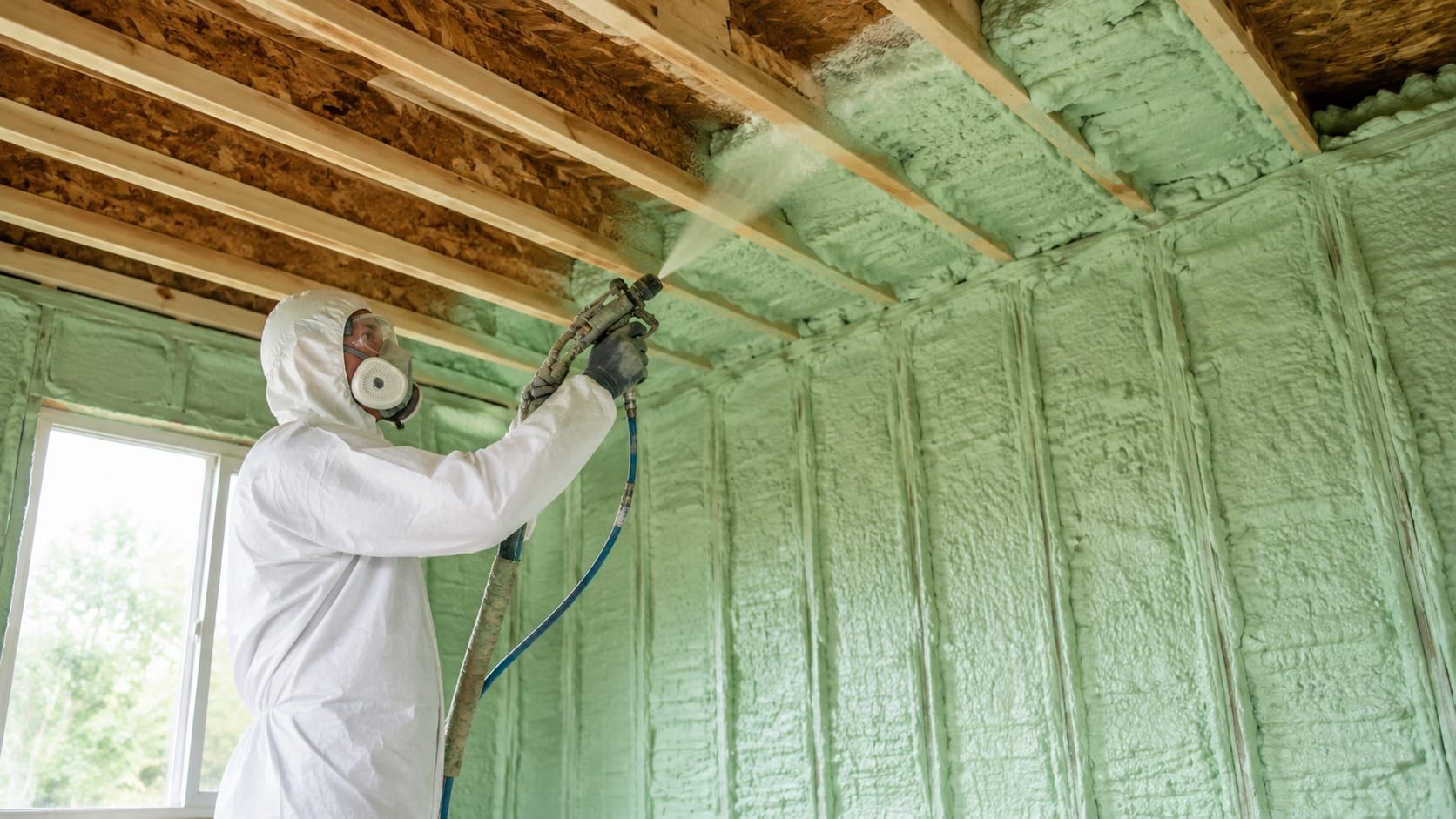
The crawl space is where most of that is won. Sealing the perimeter and, where clearance allows, the underside of the floor turns the single coldest surface in the building into a normal one. Closed cell is the usual material there because a crawl space is damp and because at roughly R-6 to R-6.5 per inch it gets a useful amount of resistance into a shallow space. On a good number of properties that is the whole recommendation, and we will say so.
The second thing it buys is a safer empty house. A building that holds heat longer sits closer to a safe setback temperature between visits, which changes the conditions the plumbing is in. It is not a promise that pipes cannot freeze — that depends on the layout, the heating and how the place is used — but it is a real and useful difference, and it is the reason a lot of owners do the work at all.
What it will not do is turn a summer building into a winter one on its own. If the heating is undersized or the water has to be drained every autumn regardless, insulation does not change that, and we would rather tell you before the job than let it take the blame afterwards.
The full range, chosen to suit the building rather than the other way round.
An expanding foam that air-seals and insulates in a single application, reaching the gaps batts cannot.
Learn more →Removal, air sealing and re-insulation of attics — usually the highest-return insulation work on an older house.
Learn more →Envelope insulation specified and installed on new custom builds, working to the drawings and around the trade schedule.
Learn more →Three-season cottages and older lake properties, including the crawl spaces and roof assemblies that make winter use difficult.
Learn more →Thermal barrier and fire-resistive coatings applied over foam insulation to meet code separation requirements.
Learn more →Traditional batt insulation, installed properly — which is what actually determines whether it performs.
Learn more →Working on a building in Muskoka? The assessment and the written quote are both free, including when the answer is a smaller job than you expected.
Four steps, the same on a crawl space as on a whole building envelope.
Tell us what the building is doing and where in Muskoka it is. A short conversation narrows it to a few likely causes.
We attend and look at the assembly: cavity depth, substrate, moisture exposure, access and how the space is used.
Material, target thickness and scope in writing, so you can compare it properly against anyone else you ask.
Surfaces prepared and protected, material applied to the specified depth, then we walk the completed work with you.
Cottage work has practical constraints a house in town does not. Private roads that are not maintained in winter. Water access only. A crawl space with fourteen inches of clearance reached through a hatch in a bedroom cupboard. None of that is unusual and none of it stops the job, provided we know before the day — it affects how long the work takes, what equipment comes, and occasionally whether a particular season is realistic at all.
Spraying is also temperature-dependent. Substrate temperature affects how foam applies and cures, so an unheated building in deep winter is not always a candidate. Where it is marginal we will say so and suggest a date that works rather than turn up and find out.
Before we drive north we will ask a few things, and it helps to have the answers ready. Which lake, and how the property is reached. What the building sits on — full basement, crawl space, blocks or piers — and whether the underside is open to the outside. How it is heated, and whether the water stays on through the winter. Roughly when it was built and what has been added since. Whether anything has frozen, or come close.
The visit and the written quote are free, and they stay free when the answer turns out to be a smaller job than you expected. On a cottage a partial job is frequently the right call — crawl space and rim, and stop there — and that is a perfectly good outcome rather than a lost sale.
Muskoka is a straight run north from Barrie, and we treat it as a planned trip rather than a local call — booked as a full day on site, with the access and the season agreed before we set off.
Residential and commercial, new builds and retrofits alike.
Lake properties built for July and increasingly used in January. The cold nearly always starts underneath.
We look at the assembly before recommending anything, rather than pricing from a square-footage figure.
If batts will serve you better than foam, that is what we will quote.
The quote states what is included, so you can compare it properly.
We take cottage and waterfront work across the Muskoka lakes:
Most enquiries here begin with spray foam insulation, though attic insulation is usually the higher-return work on an older building. Fibreglass batts suit regular framed cavities, and where foam is left exposed our fireproofing service covers the protective covering. On a new build we work from the drawings — see custom home insulation — and on a lake property, cottage insulation covers the crawl space and roof assemblies those buildings need. All six are listed on the services page.
Three of our articles bear directly on what we find up here: what I check before anything gets sprayed, which is the question that decides the approach on an old cottage, why the rim joist is the best value in the house, which on a building over piers runs the whole way round, and when spray foam is not the answer, because a sealed tongue-and-groove ceiling is one of the places where it honestly is not.
If you are still weighing materials, closed cell against open cell sets out where each one earns its keep, and what actually drives the price explains why two quotes on the same building can differ. All eight articles are on the insights page.
Yes, for cottage and waterfront work. It is a straight run north and we treat it as a planned trip rather than a local call — normally booked as a full day on site, with the access and the season agreed in advance. Travel is part of the quote and we will say plainly if a property is further out than makes sense for us to take on. Call with the lake and we will give you a straight answer on the phone.
Almost always the crawl space and the rim. On a building over an open or vented crawl, that is where the cold floor, the draughts and the frozen-pipe risk all come from, and it is usually the smallest area on the whole envelope. Insulating the walls of a cottage whose underside is open to the outside is doing the work in the wrong order.
Often, but insulation is only part of it. The building also needs heating sized for the load, plumbing that will not freeze, and a foundation that can be sealed. After a look we can tell you whether envelope work gets you there or whether it is one item on a longer list. We would rather say that before the job than after.
Yes, but for a different reason than in a house. An intermittently heated building spends most of its life at outdoor temperature and then gets driven hard for two days. Air sealing and insulation shorten how long that takes and steady it out — you notice it on the Friday evening rather than in a bill. What they cannot do alone is protect plumbing in a building genuinely left to freeze; that is a question about how the water is handled.
Usually, though the options depend on whether the finish can be disturbed. If the underside is open, foam can go against the deck. If the tongue-and-groove is staying, the work has to happen from above during a roof replacement — which is why it is worth deciding at the same time as the roof rather than separately.
It can, if it is done without thinking about which way the assembly dries. On an old building that is the single most important question and it is what we spend the assessment on. It matters more in Muskoka than further south, because a building that swings between freezing and warm moves more vapour than one heated steadily.
The buildings are much the same; the winter is not. Muskoka runs colder and holds snow longer, so an assembly that is merely uncomfortable on the Simcoe shoreline can be a real problem up here. In practice that means we are less willing to leave a marginal roof or a half-sealed crawl space alone.
More than people expect. Private roads that are not ploughed, water access only, a crawl space with fourteen inches of clearance and a hatch in a bedroom cupboard — none of that is unusual and none of it is a problem, provided we know before the day. Spraying is also temperature-dependent, so an unheated building in February is not always a candidate. We would rather agree a workable date than turn up and find out.
Tell us what the building is doing and we will come and find out why. The visit and the written quote are both free.
The more you tell us, the more useful the first visit will be. If you would rather talk it through, call 705-571-3008 .
It has reached our inbox and we will get back to you shortly, usually the same working day. If it is urgent, call 705-571-3008.