Ice damming at the eaves
More common and more damaging here than inland. It is a heat-loss problem before it is a roofing problem.
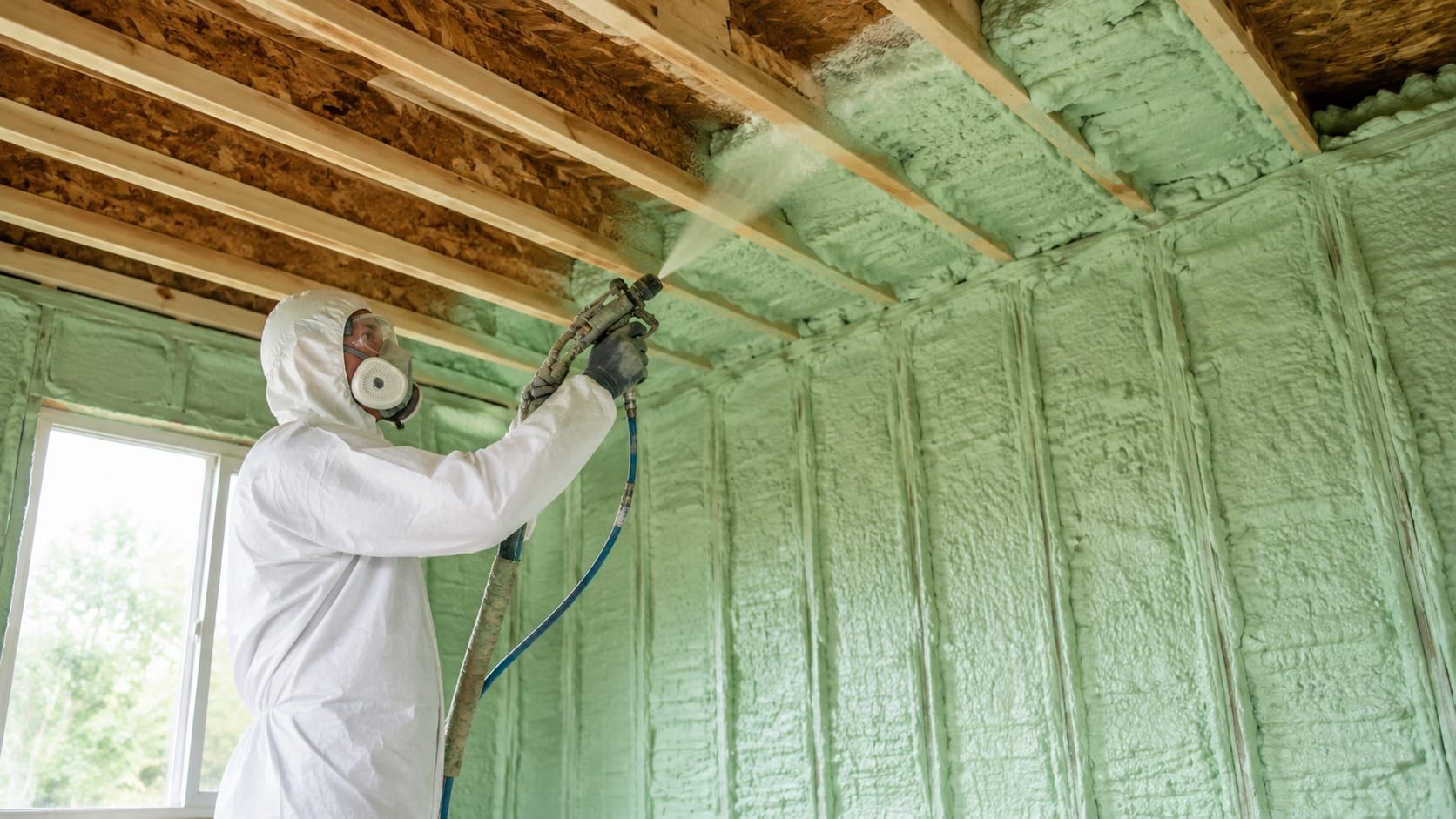
Georgian Bay snow belt conditions and a largely older housing stock along the water.
Spray Foam Masters serves Midland, Penetanguishene, Tay and Tiny Township, where Georgian Bay snow-belt conditions change which insulation problems actually appear. Ice damming and sustained cold drive most of the work here, and both start at the ceiling plane.
What we actually find on buildings here. Whether any of them applies to yours is a question for an assessment.
More common and more damaging here than inland. It is a heat-loss problem before it is a roofing problem.
Months of continuous cold are unforgiving of a marginal roof assembly in a way milder areas are not.
Insulation pushed into the eaves blocks the soffit vents that the whole roof assembly depends on.
Bay-facing properties take sustained wind, which drives air through every gap in the envelope.
Older in-town and waterfront properties commonly carry work from three or four different decades.
Heavy accumulation on assemblies with limited depth, where preserving a ventilation path still matters.
Midland sits on Georgian Bay at the south end of the 30,000 Islands, and we serve the town along with Penetanguishene, Tay Township and the surrounding Tiny Township area.
Midland sits in the Georgian Bay snow belt, and that is not a decorative detail — it changes which insulation problems actually show up. Lake-effect snow off Georgian Bay produces both heavier accumulation and longer sustained cold than Barrie or Bradford see in an average winter.
Two consequences follow. The first is ice damming, which is more common and more damaging here than further inland. Ice dams are a heat-loss problem before they are a roofing problem: warm air leaking into the attic melts snow on the roof, the meltwater refreezes at the cold eaves, and the resulting dam pushes water back under the shingles. Air sealing the ceiling plane properly is the actual fix, and it is the work we recommend first on most Midland houses.
The second is roof load and sustained cold, which is unforgiving of a marginal roof assembly. Ventilation baffles need to stay clear at the eaves, and the assembly needs to keep working through months of continuous cold rather than the freeze-thaw cycling that gets more forgiving further south.
The waterfront and older in-town properties add the usual retrofit considerations — assemblies built long before current standards, and additions from several different eras on the same building.
Bay-facing properties with sustained wind exposure and the moisture load that comes with being on the water.
Built long before current standards, typically needing the ceiling plane addressed rather than simply topped up.
Properties across Tay and Tiny Township, including workshops and equipment storage.
Snow coming off Georgian Bay does not fall evenly. A few kilometres inland, or a few metres of elevation, makes a real difference to how hard a roof gets worked — and the building stock shifts along with it.
Steep streets and houses that have been there a long time. Board sheathing, low attics with very little room to work at the eaves, and roofs that have been re-covered more often than they have been re-thought.
Similar age, similar problems and the same exposure to the bay. Older masonry is more common here than people expect, and it wants the same care as any heritage wall.
Waterfront lots and a long history of seasonal building. Crawl spaces and enclosed porches are the usual starting point, and they are usually the whole first stage of the job.
Compact older housing carrying a lot of small additions. Buildings that lose heat out of all proportion to their size, mostly at the joins.
Shoreline and bush lots, well spaced out. Conversions here often run ahead of the services, with septic, well and heating all being decided in the same year as the insulation.
Farm buildings, workshops and drive sheds. Steel roofs, long spans, and condensation as the main enemy rather than cold.
All of these show up elsewhere. They show up here more often, and they do more damage when they do, because the cold holds for months rather than days.
Every second Midland house we look at has had vents added at some point. A ridge vent, more soffit, a couple of turbines. It rarely helps, and there is a reason for that.
A roof is vented to carry moisture away and to keep the deck cold so the snow on it melts evenly. That works when the ceiling below is sealed. When the ceiling leaks, the vents simply give the warm air somewhere convenient to go, and the pressure difference gets stronger, so more of it goes. You have improved the exhaust on a leak.
The sequence that does work is dull. Seal the ceiling plane. Duct the fans outside instead of into the attic. Baffle the eaves so the airflow stays above the insulation rather than blowing through it. Insulate to depth, keeping it clear of the vent path. Then, more often than not, the venting that was already there turns out to have been adequate all along.
We are not against ventilation. We are against paying for it twice because the first attempt was aimed at the wrong half of the problem.
The full range, chosen to suit the building rather than the other way round.
An expanding foam that air-seals and insulates in a single application, reaching the gaps batts cannot.
Learn more →Removal, air sealing and re-insulation of attics — usually the highest-return insulation work on an older house.
Learn more →Envelope insulation specified and installed on new custom builds, working to the drawings and around the trade schedule.
Learn more →Three-season cottages and older lake properties, including the crawl spaces and roof assemblies that make winter use difficult.
Learn more →Thermal barrier and fire-resistive coatings applied over foam insulation to meet code separation requirements.
Learn more →Traditional batt insulation, installed properly — which is what actually determines whether it performs.
Learn more →Working on a building in Midland? The assessment and the written quote are both free, including when the answer is a smaller job than you expected.
Four steps, the same on a crawl space as on a whole building envelope.
Tell us what the building is doing and where in Midland it is. A short conversation narrows it to a few likely causes.
We attend and look at the assembly: cavity depth, substrate, moisture exposure, access and how the space is used.
Material, target thickness and scope in writing, so you can compare it properly against anyone else you ask.
Surfaces prepared and protected, material applied to the specified depth, then we walk the completed work with you.
There is one advantage to a winter here: the building shows its hand. Snow on a roof is a thermal image. Melted patches, a bare strip along the ridge, ice starting at one eave and stopping at a gable — all of it points somewhere, and none of it is visible in July.
So if a roof or an attic has been on your list, booking the look in the coldest part of the year is not a bad idea, even if the work itself happens later. We photograph what the snow is doing, then go inside and find out why it is doing it.
Working through a Midland winter is normal for us. Scheduling around it is the part that takes some thought — a laneway a truck can actually reach, somewhere to stage material out of the weather, and a hatch that is not behind six months of stored boxes. Attic work in particular goes better in cold weather than in an August attic at forty-five degrees, which is worth remembering at the time of year when nobody wants to think about insulation.
The other thing a winter visit settles is whether the problem is where you think it is. Plenty of people call us about a wall and end up with a quote for a hatch and a run of top plate, because that is what the snow line was pointing at. It is a cheaper answer, and it is the right one more often than the wall is.
We work right across the Simcoe County area from Barrie, so we can attend Midland quickly and come back if something needs a second look.
Residential and commercial, new builds and retrofits alike.
Georgian Bay snow belt conditions and a largely older housing stock along the water.
We look at the assembly before recommending anything, rather than pricing from a square-footage figure.
If batts will serve you better than foam, that is what we will quote.
The quote states what is included, so you can compare it properly.
We cover Midland and the surrounding communities:
Most enquiries here begin with spray foam insulation, though attic insulation is usually the higher-return work on an older building. Fibreglass batts suit regular framed cavities, and where foam is left exposed our fireproofing service covers the protective covering. On a new build we work from the drawings — see custom home insulation — and on a lake property, cottage insulation covers the crawl space and roof assemblies those buildings need. All six are listed on the services page.
The snow belt version of this is covered at length in ice dams are a heat problem, and the sequence that actually fixes it is in sealing an attic before you insulate it.
If you are still weighing materials, closed cell against open cell sets out where each one earns its keep, and what actually drives the price explains why two quotes on the same building can differ. All eight articles are on the insights page.
Lake-effect snow off Georgian Bay produces both heavier accumulation and longer sustained cold than inland communities see. More snow sitting on the roof for longer means more opportunity for heat escaping into the attic to melt it, and a colder eave for the meltwater to refreeze against. The cause is still heat loss; the climate simply makes it show up more often.
It addresses the usual cause. Ice dams form when heat leaking into the attic melts snow that then refreezes at the cold eave. Air sealing and insulating the ceiling plane keeps the attic cold, which is what stops the melting. Roof ventilation and the roof assembly matter too, so a badly ventilated roof may still need separate attention. Anyone promising a guaranteed result without seeing the roof is guessing.
Yes — Midland along with Penetanguishene, Tay Township, Tiny Township, Victoria Harbour and Port McNicoll. All are within our Simcoe County service area. Being close enough to attend quickly, and to come back if something needs a second look, is part of why we hold the service area to the county.
It depends on the assembly, but sustained wind exposure means air sealing consistently produces a bigger comfort improvement here than adding R-value alone. Closed cell foam is frequently appropriate in crawl spaces and against foundations because it handles the moisture load as well as insulating. The assessment establishes cavity depth and moisture exposure before anything is recommended.
Yes, and a good deal of our work happens in the cold months because that is when people notice the problem. Conditions do matter: substrate temperature and ambient conditions during application affect how the product behaves, and every product has a range set by its manufacturer. In practice this affects scheduling and preparation more than whether the job can be done.
Frequently not. Ice dams in particular are widely misdiagnosed as a roofing fault when the cause is heat escaping into the attic. Roofing measures manage the symptom; they do not remove the cause. An attic inspection will tell you whether you are looking at a heat problem, a ventilation problem, or both — and it costs nothing.
Tell us what the building is doing and we will come and find out why. The visit and the written quote are both free.
The more you tell us, the more useful the first visit will be. If you would rather talk it through, call 705-571-3008 .
It has reached our inbox and we will get back to you shortly, usually the same working day. If it is urgent, call 705-571-3008.