Shallow lakeside crawl spaces
Shoreline properties frequently sit over crawl spaces that were never meant to be conditioned, and are usually why the floor above is cold.
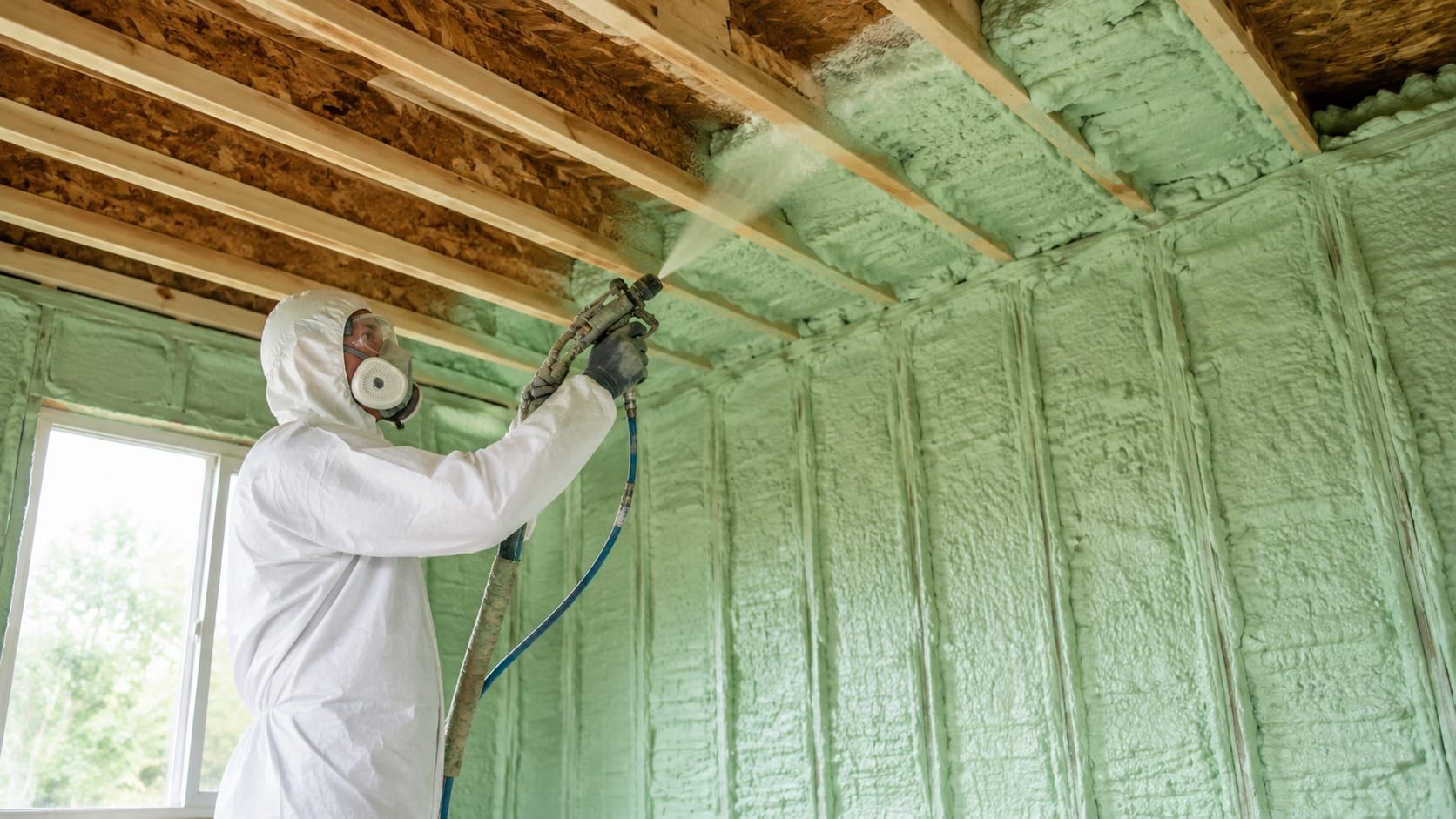
Lakeside conversions and fast-growing subdivisions — two very different insulation problems in one town.
Spray Foam Masters installs spray foam, attic and batt insulation across Innisfil, from the Alcona subdivisions to the older shoreline communities at Lefroy, Belle Ewart and Gilford. We assess the building before quoting, because the town splits into two very different kinds of insulation problem.
What we actually find on buildings here. Whether any of them applies to yours is a question for an assessment.
Shoreline properties frequently sit over crawl spaces that were never meant to be conditioned, and are usually why the floor above is cold.
Converted cottages often carry insulation added across several renovations, with the air barrier never addressed.
Alcona houses are built to code and generally sound, but the rim joist is the recurring comfort complaint.
The room above the garage that never holds temperature, common across the newer subdivisions.
Shoreline homes commonly have additions built decades apart, each to whatever standard applied at the time.
Proximity to Lake Simcoe raises the moisture load, which changes whether closed or open cell is appropriate.
Innisfil sits immediately south of Barrie along the west shore of Lake Simcoe, and it is one of the fastest-growing municipalities in Simcoe County. We work throughout the town, from the Alcona subdivisions to the older shoreline communities at Lefroy, Belle Ewart and Gilford.
Innisfil’s housing splits fairly cleanly into two groups, and they need different work.
The first is the newer subdivision stock, concentrated in Alcona and expanding steadily. These houses are built to modern code and are generally sound, but the recurring weak points are the same ones we see across all new construction: rim joists, the garage ceiling under a bonus room, and cathedral ceilings where batts were never going to fit cleanly. Targeted closed cell foam at those specific locations tends to fix a comfort complaint that whole-house measures never quite resolve.
The second is the lakeside stock — cottages along the Lake Simcoe shoreline that have been converted to year-round homes over the decades. These are the more interesting jobs. A building designed for July weekends often has shallow crawl spaces, additions framed to whatever standard applied at the time, and insulation that was added piecemeal across several renovations. Crawl spaces are usually the priority, and closed cell foam is normally the right material there because it handles the moisture load that comes with being close to the lake.
Concentrated in Alcona and still expanding. Sound envelopes where targeted work at specific assemblies fixes the complaint.
Built for summer weekends and adapted for year-round use. Shallow cavities and unconditioned crawl spaces.
Workshops, garages and storage buildings on the rural edges toward Cookstown.
Innisfil is a big town spread thin — a long stretch of shoreline with a lot of concession road in between. Where a property sits usually tells us something about what we are going to find before we get there.
The town’s centre of gravity and where most of the new building has gone. The envelopes are sound. What people phone about are the transitions: the garage ceiling, the bit that cantilevers over the front door, the one cold corner in the primary bedroom.
Older, smaller, closer to the water. Plenty of these houses started as cottages and grew a room at a time, which leaves several framing standards in one building and nothing joining them into a single air barrier.
Right on Cook’s Bay. Shallow crawl spaces are the rule rather than the exception here, and they are usually the reason the floors never feel warm no matter what the thermostat is set to.
A village that got absorbed into the commuter belt. Mixed stock — older frame and brick along the main road, newer infill behind it, and most decades in between represented somewhere.
Older masonry and frame houses around the village core, then farm properties on the roads out. Assessment work rather than package work, because almost nothing here is standard.
Single-storey homes sitting on crawl spaces, close together, often with limited access underneath. Small buildings, but the details matter more because there is nowhere to hide a rough job.
These are the six we hear most from Innisfil. None of them is a diagnosis. The point is that the thing you notice and the thing causing it are rarely in the same room.
If money were unlimited you would do everything at once. It never is, so the sequence matters, and on a lake property it is fairly consistent.
Ceiling plane first. Every hole through it — hatch, pot lights, bath fan, plumbing stack — is a small chimney, and the pressure pushing air up through them is strongest in the coldest weather. Then the bottom of the house: crawl space, rim joist, and wherever the floor meets outside air. Between them, those two ends account for most of what people feel as draught. Walls come last, and on a good number of Innisfil houses we would leave them alone entirely. Opening up a finished wall to gain a few points of R-value is a poor trade while the attic hatch is still a hole.
That order is an observation rather than a rule. We have been asked plenty of times to quote the walls first, because that is where the owner assumed the problem was. Sometimes they are right. More often the assessment moves things up and down the list, and the job gets smaller.
The full range, chosen to suit the building rather than the other way round.
An expanding foam that air-seals and insulates in a single application, reaching the gaps batts cannot.
Learn more →Removal, air sealing and re-insulation of attics — usually the highest-return insulation work on an older house.
Learn more →Envelope insulation specified and installed on new custom builds, working to the drawings and around the trade schedule.
Learn more →Three-season cottages and older lake properties, including the crawl spaces and roof assemblies that make winter use difficult.
Learn more →Thermal barrier and fire-resistive coatings applied over foam insulation to meet code separation requirements.
Learn more →Traditional batt insulation, installed properly — which is what actually determines whether it performs.
Learn more →Working on a building in Innisfil? The assessment and the written quote are both free, including when the answer is a smaller job than you expected.
Four steps, the same on a crawl space as on a whole building envelope.
Tell us what the building is doing and where in Innisfil it is. A short conversation narrows it to a few likely causes.
We attend and look at the assembly: cavity depth, substrate, moisture exposure, access and how the space is used.
Material, target thickness and scope in writing, so you can compare it properly against anyone else you ask.
Surfaces prepared and protected, material applied to the specified depth, then we walk the completed work with you.
Before we drive out we will ask a handful of questions, and it helps to have the answers to hand. Roughly when the building went up, and whether anything has been added since. What heats it, and whether the heat is even between rooms. Whether there is a crawl space, whether it is vented to the outside, and whether the ground under it is covered. Whether water has ever been in it. What is in the attic now, if you know, and whether anyone has been up there recently.
None of that replaces an assessment. It does tell us what to bring and how long to allow, and now and then it tells us the honest answer is something other than insulation — a bath fan venting into the attic, a missing damper, a dryer duct that came apart years ago. We would rather say that on the phone than after you have paid for a truck to turn up.
The visit and the written quote are free either way, and they stay free when the recommendation turns out to be smaller than you were braced for.
We work right across the Simcoe County area from Barrie, so we can attend Innisfil quickly and come back if something needs a second look.
Residential and commercial, new builds and retrofits alike.
Lakeside conversions and fast-growing subdivisions — two very different insulation problems in one town.
We look at the assembly before recommending anything, rather than pricing from a square-footage figure.
If batts will serve you better than foam, that is what we will quote.
The quote states what is included, so you can compare it properly.
We cover the whole town and the surrounding shoreline communities:
Most enquiries here begin with spray foam insulation, though attic insulation is usually the higher-return work on an older building. Fibreglass batts suit regular framed cavities, and where foam is left exposed our fireproofing service covers the protective covering. On a new build we work from the drawings — see custom home insulation — and on a lake property, cottage insulation covers the crawl space and roof assemblies those buildings need. All six are listed on the services page.
Two of our articles bear directly on what we find here: why the rim joist is the best value in the house, which is the recurring complaint in the Alcona subdivisions, and what I check before anything gets sprayed, which covers the crawl space question on the shoreline properties.
If you are still weighing materials, closed cell against open cell sets out where each one earns its keep, and what actually drives the price explains why two quotes on the same building can differ. All eight articles are on the insights page.
Yes, throughout the town — Alcona, Lefroy, Stroud, Cookstown, Belle Ewart and Gilford. Innisfil is immediately south of our Barrie base, so it is one of the areas we reach most easily. The two halves of the town need quite different work, which is why we look at the building before quoting rather than pricing from a description.
On shoreline properties it is usually the crawl space rather than the walls. A building designed for summer use often sits over a space that was never intended to be conditioned, and air moves freely through it. Insulation in the walls does very little about that. An assessment establishes where the air is actually moving before anyone recommends material.
Closed cell foam is frequently the answer in crawl spaces and against foundations, because it handles the moisture load that comes with being close to the water as well as insulating. Where cavity depth is limited — common in buildings framed for seasonal use — closed cell also delivers roughly twice the R-value per inch of open cell, which matters when there is no depth to spare.
Often, but as targeted work rather than a whole-house job. Newer subdivision houses are built to code and generally perform well; the complaints we get called about are specific assemblies — the rim joist, the garage ceiling under a bonus room, the occasional cathedral ceiling. Sealing those is usually cheaper and more effective than insulating the whole envelope again.
Yes. Detached garages, workshops and storage buildings come up regularly on the rural edges of the town. Steel and post-frame buildings often suit closed cell foam because it adheres directly to the substrate and controls condensation, and because there is frequently nothing to hold a batt in place.
Innisfil is one of the closest parts of our service area to Barrie, so scheduling an assessment is usually straightforward. Call and we will arrange a time that works around you. The assessment and the written quote are both free, including when the recommendation turns out to be a smaller job than you expected.
Tell us what the building is doing and we will come and find out why. The visit and the written quote are both free.
The more you tell us, the more useful the first visit will be. If you would rather talk it through, call 705-571-3008 .
It has reached our inbox and we will get back to you shortly, usually the same working day. If it is urgent, call 705-571-3008.