Condensation under metal roofs
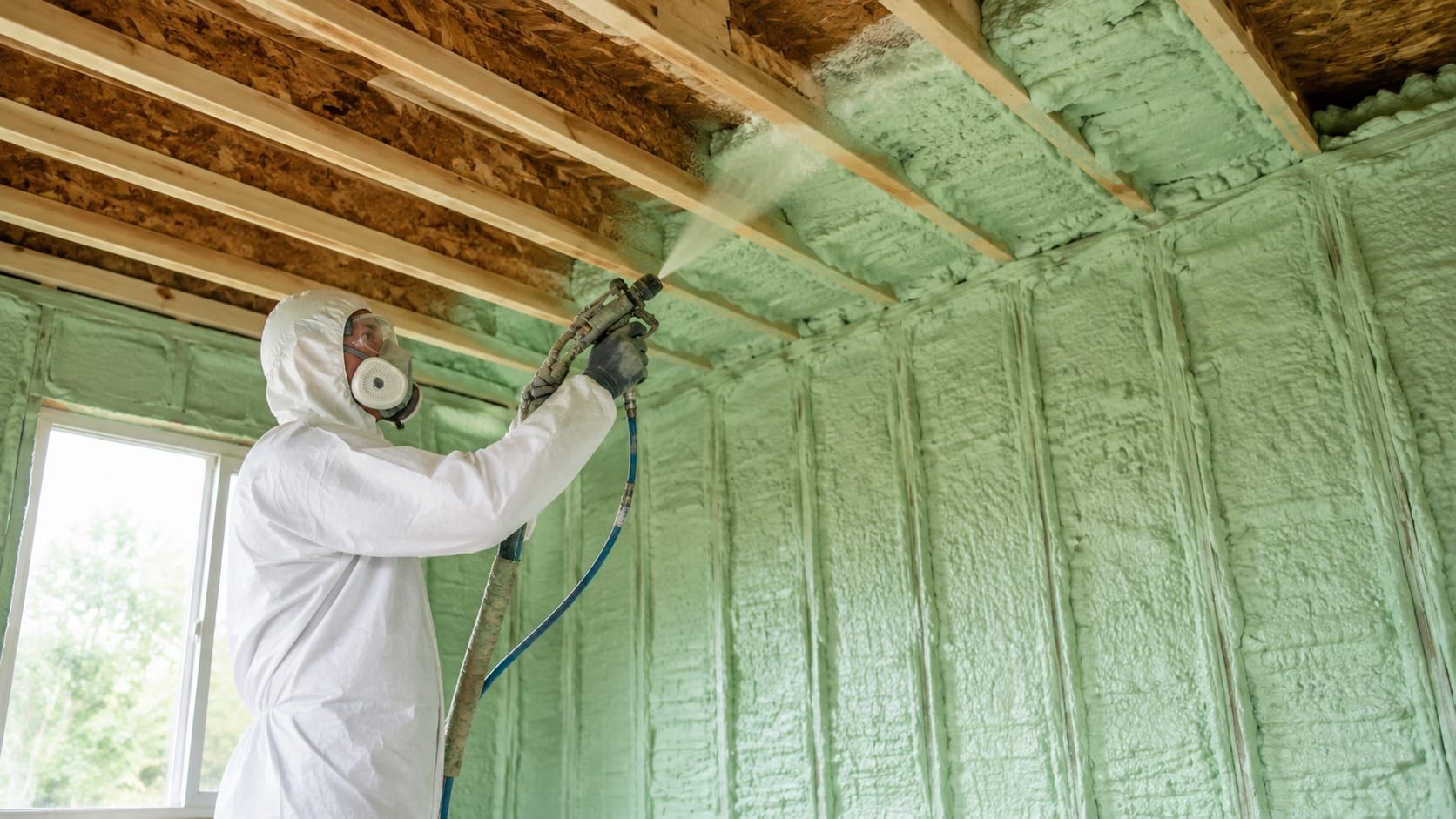
Agricultural buildings with steel roofing sweat heavily. Closed cell foam adheres directly and controls it.
New subdivision growth alongside working agricultural and industrial buildings.
Spray Foam Masters serves Alliston, Beeton, Tottenham and the surrounding New Tecumseth countryside. The mix here is broader than most of our service area, spanning newer subdivision housing, working agricultural buildings and industrial premises.
What we actually find on buildings here. Whether any of them applies to yours is a question for an assessment.
Agricultural buildings with steel roofing sweat heavily. Closed cell foam adheres directly and controls it.
Large uninterrupted spans with nothing to hold a batt in place, so foam is often the only practical option.
Subdivision growth has added plenty of code-compliant housing where the rim joist is the recurring complaint.
The room above the garage that never holds heat, usually a floor and rim problem rather than a ceiling one.
Buildings that need to hold temperature for machinery or work, sometimes tolerating washdown.
Industrial premises where the requirement arrives as an issued specification rather than a comfort complaint.
Alliston is the largest community in the Town of New Tecumseth, in the southwest corner of Simcoe County. We serve Alliston along with Beeton, Tottenham and the surrounding rural properties.
Alliston has a broader mix of building types than most of the communities we serve, and the work reflects that.
On the residential side, subdivision growth has added a substantial amount of newer housing. These builds are code-compliant and generally sound, so the work is usually targeted rather than wholesale — rim joists, bonus rooms over garages, and cathedral ceilings, which between them account for most of the comfort complaints we get called about in newer homes.
The agricultural side is genuinely different work. Barns, equipment storage, workshops and outbuildings have requirements that do not apply to houses: large uninterrupted spans, steel or post-frame construction rather than stud framing, condensation control under a metal roof, and in some cases a need for insulation that tolerates washdown. Closed cell foam suits a lot of these buildings well, because it adheres directly to steel and controls condensation on the underside of the deck. It is also frequently the only practical option, since there is nothing to hold a batt in place.
The industrial employment in and around Alliston brings commercial work as well, where the requirement is usually a specified thermal barrier or fireproofing application rather than a comfort improvement.
Newer housing built to current code, where targeted work at specific assemblies resolves most complaints.
Barns, equipment storage, workshops and outbuildings with requirements that do not apply to houses at all.
Premises where a specified thermal barrier or fireproofing application is the requirement.
New Tecumseth is three villages, a lot of new housing and a great deal of farmland. The work changes completely depending on which of those you are calling from, so we ask early.
Brick and frame houses of a certain age, with attics that have been added to more than once and basements that were never intended to be lived in but generally are.
Built to code and performing about as you would expect, which means the complaints are specific: one room, one corner, one floor. Rarely the whole envelope.
A village core with older stock around it and newer streets on the edges. Mixed enough that we do not assume anything before we have looked at the building.
A similar shape to Beeton, further south. Detached shops, garages and hobby buildings come up more often here than anywhere else in the township.
Barns, drive sheds, equipment storage and workshops. Steel and post-frame construction, long uninterrupted spans, and requirements that have nothing to do with comfort.
Warehousing and light manufacturing, where the brief is normally a specified assembly and a covering requirement rather than a warmer building.
Two very different lists in one town. The first four are houses. The last two are buildings that have a job to do.
A house is a small sealed box with a lot of interruptions in it. A drive shed is a big open one with almost none, and the things that matter reorder themselves accordingly.
Condensation comes first. Warm air meeting a cold steel deck produces water, and water dripping onto equipment is expensive in a way that a cold corner in a bedroom is not. Closed cell foam adhered directly to the underside of the sheeting removes the cold surface it forms on, which is why it is used so widely in agricultural work — there is frequently nothing to hold a batt in place anyway, and no ceiling to lay one on.
Then the details specific to the operation. Whether the space gets washed down. Whether it is heated all winter or only when somebody is working in it. Whether livestock are in it, because that changes the moisture load entirely. Whether any of the foam needs a covering over it, which depends on how the space is used and what the specification says.
Access is the other thing worth settling early. A shed with equipment parked in it and a hay loft half full is a different day’s work from an empty shell, and the difference is worth knowing before anyone quotes it. If a building can be cleared for a day, say so; if it cannot, we will work around what is in it.
We ask about the work the building does before we talk about materials. In this part of the county that is usually the more useful conversation.
The full range, chosen to suit the building rather than the other way round.
An expanding foam that air-seals and insulates in a single application, reaching the gaps batts cannot.
Learn more →Removal, air sealing and re-insulation of attics — usually the highest-return insulation work on an older house.
Learn more →Envelope insulation specified and installed on new custom builds, working to the drawings and around the trade schedule.
Learn more →Three-season cottages and older lake properties, including the crawl spaces and roof assemblies that make winter use difficult.
Learn more →Thermal barrier and fire-resistive coatings applied over foam insulation to meet code separation requirements.
Learn more →Traditional batt insulation, installed properly — which is what actually determines whether it performs.
Learn more →Working on a building in Alliston? The assessment and the written quote are both free, including when the answer is a smaller job than you expected.
Four steps, the same on a crawl space as on a whole building envelope.
Tell us what the building is doing and where in Alliston it is. A short conversation narrows it to a few likely causes.
We attend and look at the assembly: cavity depth, substrate, moisture exposure, access and how the space is used.
Material, target thickness and scope in writing, so you can compare it properly against anyone else you ask.
Surfaces prepared and protected, material applied to the specified depth, then we walk the completed work with you.
There is a version of this trade that quotes the whole envelope regardless of what is wrong. We would rather not, and on a house built in the last fifteen or twenty years it is rarely justified.
The insulation in those walls is generally present and generally correct. What is missing is continuity — at the rim joist, at the garage ceiling, where a cantilever hangs out over open air, where a bulkhead runs through a cold space, at the top of a party wall. Small areas, a fraction of the total, and between them the reason one room behaves differently from the rest of the house.
The practical upshot is that plenty of these jobs are half a day and a fraction of what people brace themselves for. That is not modesty about the work. It is that the assessment finds a boundary two metres long instead of a house-wide deficiency, and quoting the house-wide version would be charging for insulation that is already in the wall.
When the assessment does find something larger, we say that too, and we put it in writing with the reasoning attached.
We work right across the Simcoe County area from Barrie, so we can attend Alliston quickly and come back if something needs a second look.
Residential and commercial, new builds and retrofits alike.
New subdivision growth alongside working agricultural and industrial buildings.
We look at the assembly before recommending anything, rather than pricing from a square-footage figure.
If batts will serve you better than foam, that is what we will quote.
The quote states what is included, so you can compare it properly.
We cover Alliston and the wider New Tecumseth area:
Most enquiries here begin with spray foam insulation, though attic insulation is usually the higher-return work on an older building. Fibreglass batts suit regular framed cavities, and where foam is left exposed our fireproofing service covers the protective covering. On a new build we work from the drawings — see custom home insulation — and on a lake property, cottage insulation covers the crawl space and roof assemblies those buildings need. All six are listed on the services page.
For the farm and shop buildings, what I check before anything gets sprayed covers condensation under a steel deck. For the newer subdivision houses, why the rim joist is the best value in the house is usually the whole answer.
If you are still weighing materials, closed cell against open cell sets out where each one earns its keep, and what actually drives the price explains why two quotes on the same building can differ. All eight articles are on the insights page.
Yes, and it is genuinely different work from housing. Large uninterrupted spans, steel or post-frame construction rather than stud framing, condensation control under a metal roof, and sometimes a need for a surface that tolerates washdown. Closed cell foam suits many of these buildings because it adheres directly to steel and there is frequently nothing to hold a batt in place.
That is condensation rather than a leak. Warm, moist air inside the building reaches the cold underside of the steel and condenses there. Closed cell foam applied directly to the deck removes the cold surface the moisture was condensing on, which is why it is so commonly specified for agricultural and equipment storage buildings.
Yes — Alliston, Beeton, Tottenham, Everett and the wider New Tecumseth area. All fall within Simcoe County and within the area we serve from Barrie. If your property is on the rural edges and you are unsure whether it is inside our area, call and ask.
Usually targeted work rather than a whole-house job. Subdivision housing here is built to code and generally sound; the complaints we get called about are specific assemblies — rim joists, bonus rooms over garages, the occasional cathedral ceiling. Sealing those tends to be cheaper and more effective than insulating the whole envelope again.
Yes. On commercial work the requirement usually arrives as a drawing set or project manual naming a system, a substrate and a thickness, and the task is to execute it and document what was done. Send us what the specification names and we will tell you plainly whether it is work we can take on before anyone spends time on a site visit.
It depends on the building and how the space is used. Foam plastic insulation generally cannot be left exposed to occupied space, and requirements vary by occupancy and construction type. What applies to your building comes from the project documents and the requirements for that building, not from a general rule. We will cover it in the estimate rather than leaving it as a surprise.
Tell us what the building is doing and we will come and find out why. The visit and the written quote are both free.
The more you tell us, the more useful the first visit will be. If you would rather talk it through, call 705-571-3008 .
It has reached our inbox and we will get back to you shortly, usually the same working day. If it is urgent, call 705-571-3008.