Unconditioned crawl spaces
Never intended to be heated, and usually the single largest source of cold floors in a conversion.
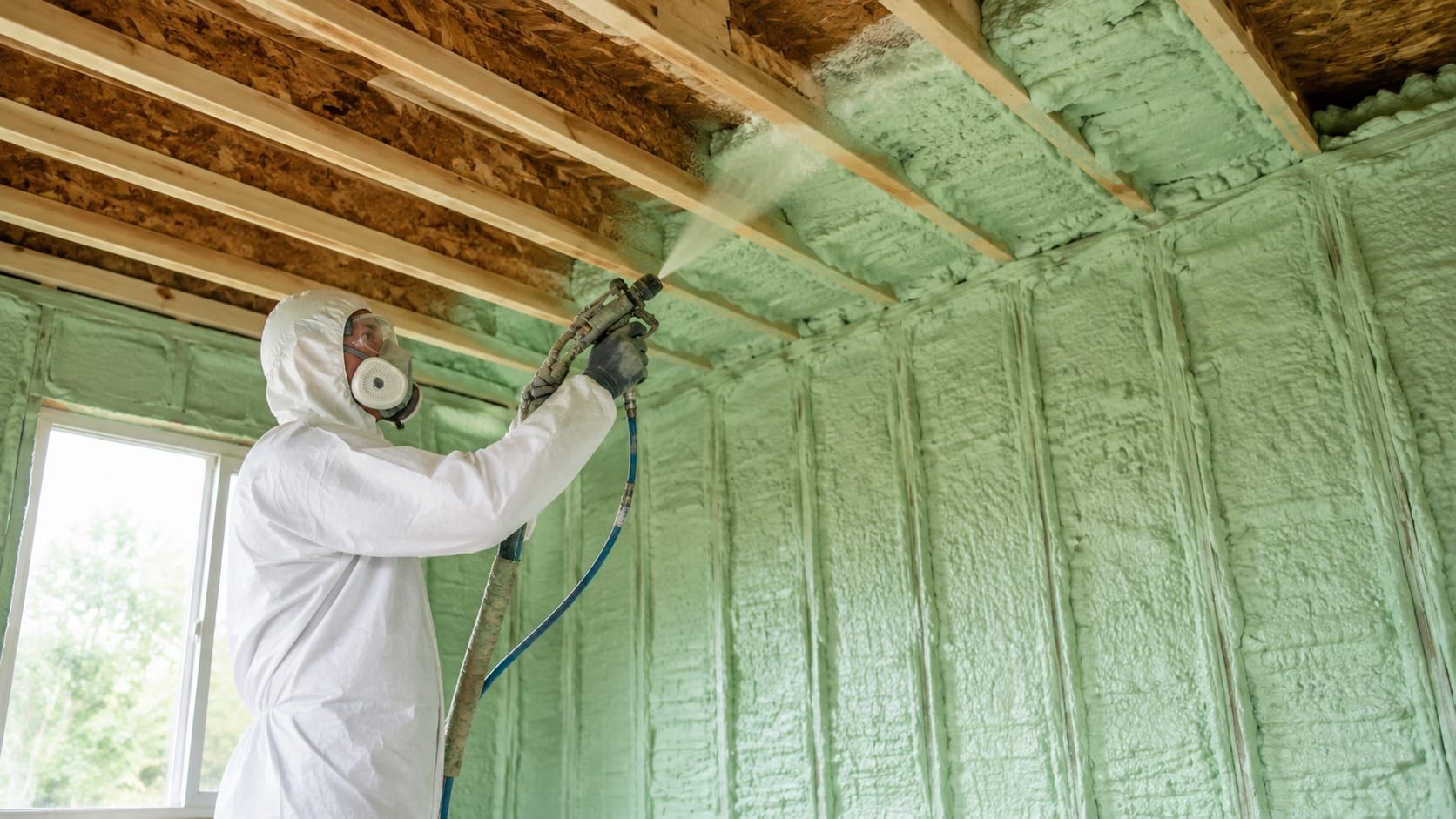
Cottage-to-year-round conversions on an exposed Georgian Bay shoreline.
Spray Foam Masters works throughout Wasaga Beach, where a large share of the housing was originally built as seasonal cottages. Converting a summer building into one that performs in February is most of what we do here, and it starts underneath the floor more often than people expect.
What we actually find on buildings here. Whether any of them applies to yours is a question for an assessment.
Never intended to be heated, and usually the single largest source of cold floors in a conversion.
Framed thinner than modern construction, leaving little depth — exactly where closed cell earns its cost.
Very little shelter, so wind pressure on the envelope is constant rather than occasional.
Built across several decades, each to a different standard, and rarely tied into a continuous air barrier.
Ground moisture and lake proximity change whether closed or open cell is the appropriate material.
Systems emptied every autumn now have to survive the winter, which changes what the envelope must do.
Wasaga Beach fronts Nottawasaga Bay along the longest freshwater beach in the world, and it has been steadily converting from a seasonal resort town into a year-round community. That transition is most of what we do here.
A large share of Wasaga Beach’s housing was originally built as seasonal cottages. Those buildings were designed for July, and nothing about them anticipated February.
The pattern repeats from property to property. Walls framed shallower than modern construction, leaving little cavity depth to work with — which is exactly the situation where closed cell foam earns its cost, because it delivers roughly twice the R-value per inch of open cell and lets a thin wall reach a useful number. Crawl spaces that were never intended to be conditioned, and are often the single largest source of cold floors. Additions and enclosed porches built across several decades, each to a different standard and rarely tied into a continuous air barrier. Plumbing that was drained every autumn and now has to survive the winter.
The exposure matters too. Wasaga Beach sits open to Georgian Bay with very little shelter, so wind pressure on the building envelope is sustained rather than occasional. Wind drives air through every gap in an assembly, which is why air sealing consistently produces a bigger comfort improvement here than adding R-value alone. It is also why a conversion done as a series of patches rarely works — the gaps that were left are the ones doing the damage.
The dominant type here. Designed for July, with nothing about them anticipating February.
Purpose-built housing as the town shifts from resort to permanent community.
Buildings used hard in season and lightly outside it, with the heating pattern that implies.
A long shoreline and a town that runs lengthways rather than deep. How close a building sits to the water tends to predict how it was built and what has been done to it since.
The oldest and densest part of the resort stock. Small footprints, tight lots, and buildings that have been altered more than once by more than one owner.
More space, later building, and a mix of original cottages and full rebuilds sitting side by side on the same street.
Year-round housing on the inland side, generally better built, but usually with a seasonal structure somewhere in the family — a garage, a bunkie, a porch that got enclosed.
Properties on the river rather than the bay. Damp ground and shallow crawl spaces are the recurring theme, and the order of work reflects that.
Rural properties, shops and outbuildings inland from the town, where the wind exposure drops off but the building age climbs.
Recent housing built to current standards. Targeted work — rim joists, garage ceilings, the occasional cathedral ceiling — rather than a conversion.
If a building started life as a cottage, these six turn up in some combination. The order they need dealing with is rarely the order they get noticed in.
Two things make Wasaga Beach different from anywhere else we work, and they compound each other.
The first is what these buildings sit on. Cottages here were commonly put up on piers, blocks or a shallow perimeter wall over sand, with a crawl space underneath that was never meant to be part of the heated building. Ground moisture moves up through sand readily, so a crawl space that gets sealed without a proper ground cover and a plan for drainage becomes a damp space instead of a cold one. The sequence matters: ground cover, then air sealing, then insulation.
The second is exposure. There is very little between the bay and the town, so wind pressure on the envelope is constant rather than occasional. Wind does not simply feel cold — it drives air through every unsealed joint and strips heat out of loose insulation at the eaves. It is why two similar houses one street apart can behave quite differently, and why air sealing consistently outperforms added depth here.
Neither of those is a reason to avoid the work. Both are reasons to do it in the right order.
One thing follows from both: nothing here should be sealed up before somebody has looked underneath it. A crawl space with standing water, a rotted sill, or a rodent run through the existing insulation all change the job, and none of them is visible from inside the house. That look takes twenty minutes, and it has changed the scope more than once.
The full range, chosen to suit the building rather than the other way round.
An expanding foam that air-seals and insulates in a single application, reaching the gaps batts cannot.
Learn more →Removal, air sealing and re-insulation of attics — usually the highest-return insulation work on an older house.
Learn more →Envelope insulation specified and installed on new custom builds, working to the drawings and around the trade schedule.
Learn more →Three-season cottages and older lake properties, including the crawl spaces and roof assemblies that make winter use difficult.
Learn more →Thermal barrier and fire-resistive coatings applied over foam insulation to meet code separation requirements.
Learn more →Traditional batt insulation, installed properly — which is what actually determines whether it performs.
Learn more →Working on a building in Wasaga Beach? The assessment and the written quote are both free, including when the answer is a smaller job than you expected.
Four steps, the same on a crawl space as on a whole building envelope.
Tell us what the building is doing and where in Wasaga Beach it is. A short conversation narrows it to a few likely causes.
We attend and look at the assembly: cavity depth, substrate, moisture exposure, access and how the space is used.
Material, target thickness and scope in writing, so you can compare it properly against anyone else you ask.
Surfaces prepared and protected, material applied to the specified depth, then we walk the completed work with you.
Not every conversion happens at once, and there is no need for it to. Plenty of the properties we look at get done in two or three passes over a few years, and that works perfectly well as long as the passes are in a sensible order.
First pass, almost always: the crawl space and the ceiling plane. The bottom of the building and the top of it. Between them they account for the majority of what people describe as draught, and neither depends on decisions that have not been made yet.
Second: the transitions. Where an addition meets the original building, where a porch was enclosed, where a bulkhead or a chase runs through a cold space. Small areas with a disproportionate effect on how the place feels.
Walls last, and often only where they are open anyway — new siding, new windows, a room being gutted for other reasons. Opening a sound wall purely to insulate it is rarely the best use of the money on a building of this type.
We will lay that out in writing alongside the quote, split so you can see what each stage buys you. If the first stage turns out to be enough, that is a good outcome rather than a lost sale.
We work right across the Simcoe County area from Barrie, so we can attend Wasaga Beach quickly and come back if something needs a second look.
Residential and commercial, new builds and retrofits alike.
Cottage-to-year-round conversions on an exposed Georgian Bay shoreline.
We look at the assembly before recommending anything, rather than pricing from a square-footage figure.
If batts will serve you better than foam, that is what we will quote.
The quote states what is included, so you can compare it properly.
We cover Wasaga Beach and the surrounding communities:
Most enquiries here begin with spray foam insulation, though attic insulation is usually the higher-return work on an older building. Fibreglass batts suit regular framed cavities, and where foam is left exposed our fireproofing service covers the protective covering. On a new build we work from the drawings — see custom home insulation — and on a lake property, cottage insulation covers the crawl space and roof assemblies those buildings need. All six are listed on the services page.
For a conversion, start with what I check before anything gets sprayed, which covers the crawl-space-on-sand problem, then why air sealing beats R-value for the order the rest of the work should happen in.
If you are still weighing materials, closed cell against open cell sets out where each one earns its keep, and what actually drives the price explains why two quotes on the same building can differ. All eight articles are on the insights page.
Almost always the crawl space. Buildings put up as seasonal cottages sit over spaces that were never intended to be conditioned, and air moves through them freely. Insulating the walls does very little about a cold floor when the space beneath it is effectively outdoors. Closed cell foam in the crawl space is usually the single highest-return job on a conversion.
It varies, but the pattern repeats: crawl spaces brought into the conditioned envelope, shallow walls insulated with a material that reaches a useful value in the depth available, and additions and enclosed porches tied into a continuous air barrier. A conversion done as a series of patches rarely works, because the gaps left behind are the ones doing the damage.
Because cavity depth is usually the binding constraint. Cottage walls were framed shallower than modern construction, and closed cell delivers roughly twice the R-value per inch of open cell, so it reaches a useful total where a lower-density material cannot. It also resists moisture movement, which matters on a shoreline site. Where depth is not the constraint, we will say so.
Yes, and it is the reason air sealing consistently produces a bigger comfort improvement here than adding R-value alone. Wasaga Beach sits open to the bay with very little shelter, so wind pressure on the envelope is sustained rather than occasional. Wind drives air through every gap in an assembly, and no amount of material stops air that is moving around it.
It changes the conditions they sit in, particularly when the crawl space is brought into the conditioned envelope rather than left open to outside air. We will not promise that pipes cannot freeze — that depends on the plumbing layout, the heating and how the building is used. What we can do is tell you honestly what the envelope work will and will not change.
Yes — Wasaga Beach along with Stayner, Elmvale and the Sunnidale area. All are within Simcoe County. Being close enough to attend promptly, and to return if something needs a second look, is part of doing the work properly, so if you are not sure whether your address is covered, call and ask.
Tell us what the building is doing and we will come and find out why. The visit and the written quote are both free.
The more you tell us, the more useful the first visit will be. If you would rather talk it through, call 705-571-3008 .
It has reached our inbox and we will get back to you shortly, usually the same working day. If it is urgent, call 705-571-3008.